Welcome to our dedicated resource for dog fencing solutions in Lower Hutt! We understand how important it is to keep your beloved pets safe and secure while enhancing your property’s appeal. Whether you’re looking for permanent fencing, temporary options, or innovative invisible systems, our expert guidance will help you make informed decisions tailored to your needs. Explore our insights and find the perfect fencing solution to protect your furry friends in the unique conditions of Lower Hutt.
Table of Contents
Key Takeaways
- Lower Hutt dog owners can choose from secure temporary panels, permanent timber or steel fences, and invisible wired systems depending on property layout, budget, and dog temperament.
- Professionally installed dog fencing in Lower Hutt must withstand local wind zones, variable ground conditions, and comply with Hutt City Council bylaws and Fencing Act requirements.
- This article covers approximate price ranges, key pros and cons of each dog fencing option, and how to avoid common DIY mistakes like shallow posts and climbable designs.
- Readers will learn how to plan a fence specifically for containment (not just privacy), plus how to combine fencing with gates and dog runs for safer yards.
- An FAQ section at the end covers permits, rental properties, timeframes, and what to do with diggers, jumpers, and escape-artist dogs.
Introduction: Dog Fencing Solutions in Lower Hutt
Reliable dog fencing isn’t optional in Lower Hutt—it’s essential. With busy roads like High Street cutting through residential areas, State Highway 2 running along the valley, and popular river trails attracting foot traffic and cyclists, an unsecured dog is one open gate away from serious trouble. Add neighbouring properties with their own pets, kids, and gardens into the mix, and secure containment becomes a responsibility every dog owner shares.
When we talk about dog fencing here, we’re covering physical fences (timber, steel, chain link), temporary panel systems, and hidden or invisible fence setups that use buried wires and collar-based training. Each approach suits different situations, and many Lower Hutt properties benefit from combining systems for complete coverage.
Lower Hutt presents specific challenges that generic fencing advice doesn’t address. Strong winds sweep through the valley—this is windy Wellington, after all. Suburbs like Normandale and Wainuiomata feature sloping sections that demand stepped or raked fence designs. Properties near the Hutt River often sit on mixed soils that affect post stability. These conditions shape every decision from materials to post depth, and ignoring them leads to fences that fail when you need them most.
This article is written from the perspective of a local fencing provider experienced with dog containment across Lower Hutt and the wider Wellington region. We’ve seen what works, what doesn’t, and where dog owners consistently run into trouble.
Here’s what we’ll cover: types of fencing solutions available, design tips for effective containment, realistic costs in the current market, regulations you need to know, and how to get your project started with confidence.
Types of Dog Fencing Solutions in Lower Hutt
There’s no single best fence for every dog and every property. A retired greyhound in a compact Petone section needs something very different from a working breed on a lifestyle block in Haywards. Your budget, tenancy status, and whether you’re building new or retrofitting an existing fence all shape the right choice.
Here are the main solution categories for fencing lower hutt dog owners typically consider:
| Solution Type | Best For | Key Considerations |
|---|---|---|
| Permanent timber fencing | Homeowners wanting long-term security | Requires maintenance, excellent aesthetics |
| Coloursteel/steel panels | Wind-exposed sites, low maintenance preference | Higher upfront cost, minimal upkeep |
| Chain link and mesh | Lifestyle blocks, visibility priority | Less privacy, good airflow |
| Temporary panels | Renters, renovations, short-term needs | Portable, no permanent changes |
| Invisible/hidden systems | Large properties, open frontages | Training required, no physical barrier |
For renters, temporary dog fencing panels or portable dog runs offer containment without permanent changes. New builds can incorporate dog-specific design from the start—proper fence height, secure gates, anti-dig measures. Lifestyle blocks in areas like Haywards often combine rural-style post and rail with mesh infill for visibility and containment. Compact sections in Petone or Hutt Central might use solid timber fencing lower hutt style to maximise limited space while keeping dogs secure.
The most effective setups often combine systems. A permanent rear boundary fence plus temporary side panels during landscaping plus secure gates at access points gives layered protection for active dogs. Each layer addresses different escape routes.
Every option needs assessment against local bylaws, wind exposure, and your dog’s specific behaviour. A fence that stops one dog cold might be a minor inconvenience to a determined climber or digger. Understanding your dog comes before choosing materials.
Permanent Dog Fencing Options
Permanent dog fencing makes sense for homeowners who want long-term security, property value benefits, and compliance with boundary expectations in Lower Hutt. A well-built fence lasts decades and becomes part of your property’s appeal.
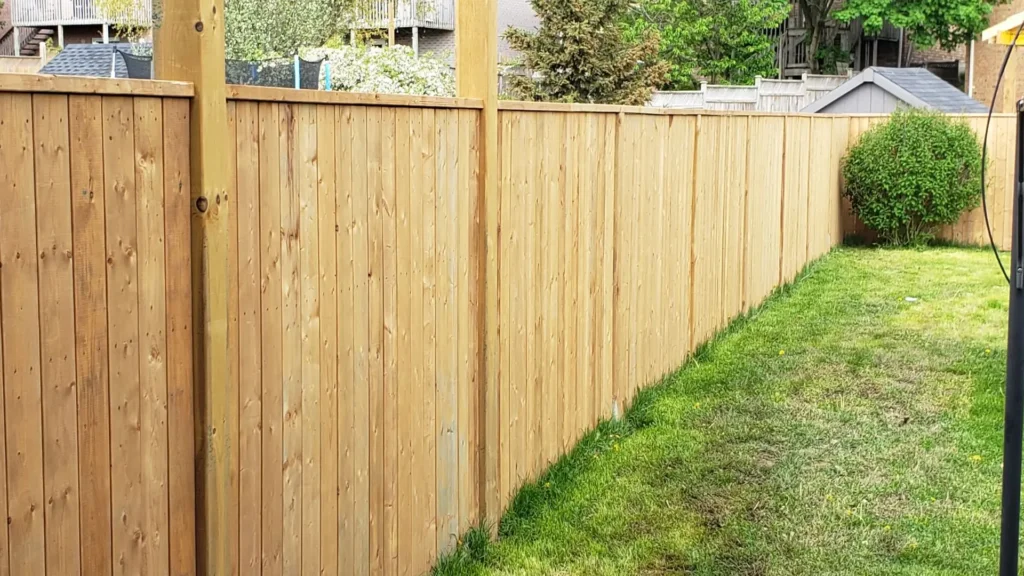
Timber paling fences remain the most common choice across Lower Hutt suburbs. A classic paling fence at 1.5 to 1.8 metres provides solid visual containment that most dogs can’t see through or climb over. The keys to longevity are correct post depth (minimum 600mm, deeper in soft ground), solid concrete footings, and quality treated timber. Untreated timber fails quickly in Lower Hutt’s damp conditions.
Coloursteel fencing and colourbond steel panels have gained popularity as a low maintenance alternative. Steel handles Wellington’s wind better than lightweight timber, resists rot, and comes in various colours to match existing buildings. For dog containment, the important detail is ensuring panels are installed without gaps at the base or between sections. Hot dip galvanised fixings prevent rust in coastal areas like Petone and Seaview.
Aluminium pool-style fencing works well for side yards and dedicated dog runs. The vertical bar design is climb-resistant when spaced correctly (no horizontal rails to use as footholds), and visibility lets you keep an eye on your dog. Pool fencing lower hutt installations can be adapted for pet containment, though modifications may be needed to reduce gap sizes for smaller breeds.
Chain-link and welded mesh suit properties prioritising airflow and visibility over privacy. Lifestyle or semi-rural properties in Belmont or Manor Park often use these materials. They’re cost-effective for long runs and can be combined with timber posts for a cleaner look.
Design Considerations for Permanent Dog Fencing
Getting the design right matters more than the materials you choose. A beautiful timber fence with poor design details will fail to contain an escape-artist dog.
Height recommendations by breed:
- Small breeds (under 10kg): 1.2m minimum
- Active medium breeds: 1.5m recommended
- Large breeds and athletic dogs: 1.8m or higher
Reduce footholds by installing horizontal rails on the outside (your neighbour’s side) rather than inside where dogs can use them as climbing steps. If rails must face inward, consider adding vertical battens or mesh to block access.
Anti-dig measures are essential for dogs that excavate. Options include:
- Buried mesh apron extending 300mm outward at ground level
- Concrete mowing strip along the fence line
- Timber kickboards at the base
- Heavier base rails set into the ground
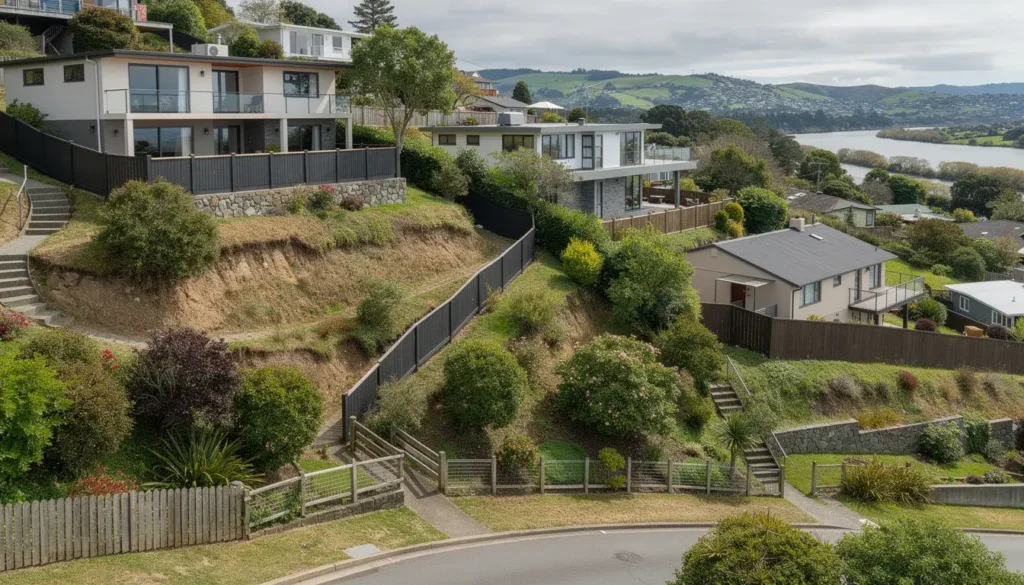
Lower Hutt’s hillside suburbs—Maungaraki, Korokoro, parts of Normandale—require stepped or raked fence panels. Longer posts with proper footing depth compensate for slope, and shallow footings on steep ground are a recipe for failure. This is where skilled workmanship from experienced fence builders makes the difference.
Gate design deserves special attention. Self-closing hinges, secure latches mounted high enough that dogs can’t nudge them open, and double-gate “airlock” entries near busy routes like Hutt Road or Waiwhetu Road prevent escapes during deliveries or visitors. Sagging gates are a common failure point—solid workmanship during installation prevents this.
For properties near coastal areas, specify galvanised or stainless steel hardware. The salt air in Petone and Seaview accelerates rust on standard fittings, and failed hardware leads to sagging rails and gaps.
Temporary Dog Fencing & Panel Systems
Temporary dog fencing offers flexibility that permanent solutions can’t match. Renters who can’t modify boundaries, homeowners mid-renovation, and people waiting on new subdivision titles all benefit from systems that don’t require post holes or council involvement.
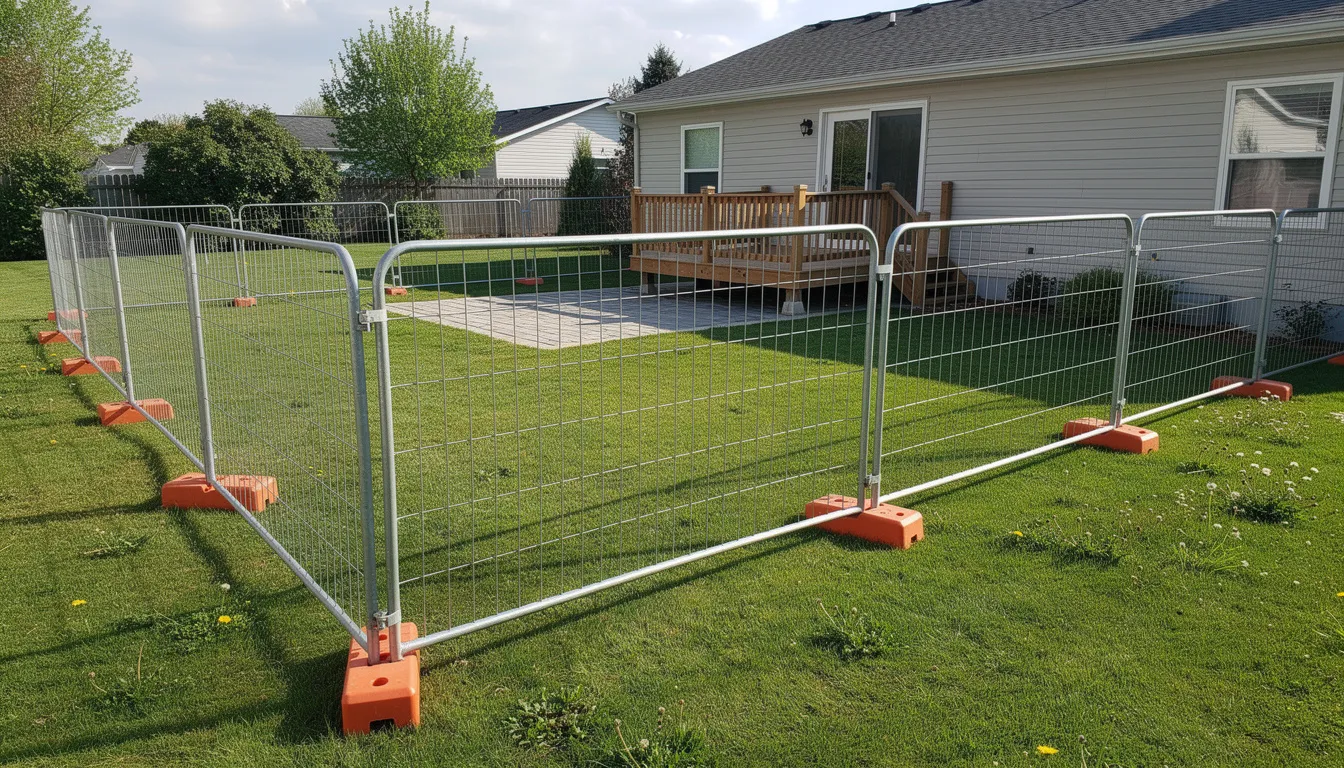
Freestanding temporary fence panels—similar to construction site fencing but adapted for pet containment—can be set up on concrete, lawn, or gravel. The best systems use weighted bases and bracing to handle Wellington’s notorious wind. Standard crowd-control barriers aren’t suitable; the gap sizes and heights don’t work for dog containment.
Common use cases include:
- Containing dogs during landscaping or building work
- Home events where doors are constantly opening
- Moving house with dogs that need secure outdoor access
- Waiting on boundary dispute resolution
- New builds where permanent fencing isn’t complete
Hire options are available across the wider Wellington region, including Lower Hutt. Companies like 360 Fence Hire and GHL TempFence service the Hutt Valley with panels designed for site safety that can be adapted for dog containment.
For anxious dogs during transitions, temporary fencing often works best combined with leads, crates, and dog runs. The goal is reducing stress while maintaining safety—not all dogs cope well with unfamiliar environments and temporary barriers alone.
Choosing and Installing Temporary Fencing in Lower Hutt
Selecting the right temporary system requires attention to details that permanent fencing handles automatically.
Key selection criteria:
- Panel height appropriate for your dog (minimum 1.2m for most breeds)
- Bar spacing narrow enough to prevent head entrapment
- Base stability rated for windy conditions
- Anchor points or weighting systems for soft ground
Layout should avoid creating jump platforms—dogs are opportunistic and will use outdoor furniture, raised garden beds, or anything else to gain height. Position panels away from objects that provide launching pads. Brace corners properly; these are the weakest points in any temporary setup.
Ground surface affects stability options:
- Concrete driveways: Clamp systems or weighted bases
- Decks: Lightweight panels with non-marking feet
- Lawn: Drive-in stakes or heavy sandbags
- Gravel: Combination of stakes and weights
Before setup, check for underground services, vehicle access requirements, and safe gate positions. Even temporary installations should respect property boundaries and neighbour access—Fencing Act courtesies apply regardless of permanence.
Invisible / Hidden Dog Fencing Systems
Invisible dog fences use buried wires that emit a radio signal to a receiver collar worn by your dog. As the dog approaches the boundary, the collar delivers a warning tone, then a vibration, and finally a safe static correction if the dog continues forward. This trains dogs to recognise and respect boundaries without physical barriers.
Hidden Fence has offered DogWatch® systems in New Zealand for 20 years, positioning them as the original veterinarian-recommended option for escaping or wandering dogs. The system calibrates correction levels to dog size and temperament, and professional installation covers the entire Wellington region.
These systems work well in specific situations:
- Open front yards where fencing would block views or breach covenants
- Large lifestyle properties where full fencing would cost $40,000+
- Properties with existing fence plus persistent escape-artist dogs
- Protecting specific zones like vegetable gardens or pool areas
Wired systems can be laid just inside an existing fence, creating a backup layer for dogs that dig under or push through physical barriers. This combination approach gives the best of both worlds.
Limitations to understand:
- No physical barrier means other animals and people can still enter your property
- Relies on collar fitting correctly and batteries being charged
- Some dogs can “push through” if highly motivated or fearful
- Requires consistent training (typically 2-4 weeks)
- Not suitable for all dogs, particularly anxious or highly driven breeds
Safety, Training, and Local Considerations
Introducing invisible fencing requires gradual, positive training. Rushing the process or relying solely on corrections creates stressed, confused dogs. The warning tone and vibration stages exist to prevent dogs ever needing static correction once trained—it’s a learning system, not a punishment system.
Consult your vet or a qualified trainer before using electronic collars if your dog has anxiety, health conditions, or reactivity issues. Leading animal behaviour veterinarians recommend DogWatch® for critical containment cases, but individual dog assessment is essential.
An invisible fence doesn’t stop incoming threats. For properties near schools, shared walkways, or busy streets in Lower Hutt, this matters. Strange dogs, wildlife, and curious children can still enter your yard. Combining invisible systems with partial physical fences, hedges, or gates in denser suburbs improves both safety and neighbour relations.
Before installation, check Hutt City Council guidance on electronic containment systems. Renters need landlord permission. Body corporate rules in townhouse complexes may restrict their use. A quick enquiry avoids problems later.
Planning Your Dog Fence in Lower Hutt
A systematic approach prevents expensive mistakes and ensures your fence actually contains your dog.
Step-by-step planning framework:
- Assess your dog’s behaviour and escape tendencies
- Map your property including slopes, existing structures, and access points
- Check Hutt City Council bylaws and any covenant restrictions
- Choose fence type based on dog needs, property features, and budget
- Plan installation with a professional fencing contractor
Spend at least a week observing your dog’s escape habits before finalising design. Does she dig at the base? Jump at specific heights? Push through weak sections? Chew timber? Each behaviour requires different solutions.
Evaluate your section features carefully. Slopes in Maungaraki need different treatment than flat sites in Lower Hutt Central. Riverbank soil near Melling may require deeper footings. Concrete patios affect panel placement. Shared driveways with neighbours require discussion about gate positions.
Boundary checks save disputes. Use existing survey pegs, consult your Land Information Memorandum (LIM), or hire a surveyor if boundaries are unclear. Neighbour disputes over fence placement are common and entirely avoidable with upfront verification.
Plan for the future. A second dog, children, outdoor entertaining areas, or additional parking might all change where and how fencing should be installed. Building flexibility into your design avoids costly modifications later.
Working With Local Fencing Professionals
Experienced local fence builders understand Lower Hutt’s specific challenges—wind zones, coastal conditions, variable soils, and council expectations. This local knowledge translates to fences that perform better and last longer.
What a good site visit looks like:
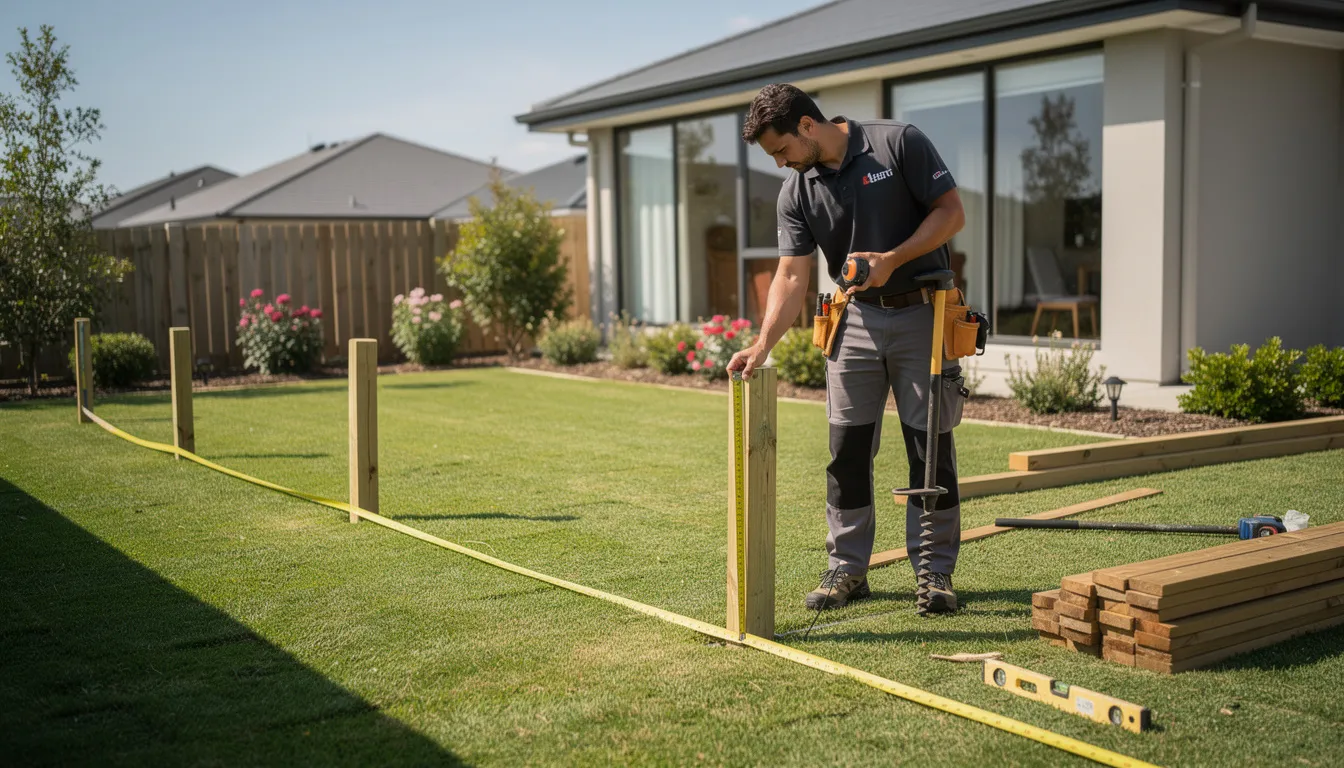
- Accurate measuring of all fence lines
- Ground condition assessment (soil type, drainage, slopes)
- Discussion of your dog’s behaviour and escape history
- Height, material, and gate position recommendations
- Honest advice about what’s necessary versus nice-to-have
Request written fencing quotes lower hutt providers should supply detailing materials, post depth specifications, hardware type, fence height, and any allowances for retaining or earthworks. Itemised quotes let you compare options transparently and identify where costs might be trimmed without compromising containment.
Ask about warranties on both materials and workmanship. Wellington’s climate tests fences hard—weather delays during installation are normal, and good contractors communicate clearly about timing.
Maintenance schedules matter for timber fencing especially. Re-staining every few years, checking gate hinges annually, and inspecting post bases after heavy rain keeps your fence secure. Local fencing contractors can advise on maintenance appropriate to your materials and location.
Dog Fencing Costs in Lower Hutt
Fencing cost lower hutt projects involve varies significantly based on length, height, materials, terrain, access, and whether demolition, retaining, or tree removal is needed. Straight talk on fencing cost means acknowledging this variation upfront.
Approximate price ranges (2025-2026 NZD):
| Solution | Approximate Cost |
|---|---|
| Basic timber paling dog fence | $150-$250 per metre installed |
| Coloursteel/Colourbond panels | $200-$350 per metre installed |
| Chain-link dog run (3m x 3m) | $2,500-$4,500 complete |
| Temporary fence hire | $50-$100 per week for basic setup |
| Invisible fence system | $1,500-$4,000 depending on property size |
| Full custom boundary fence | $8,000-$40,000+ for complete perimeter |
Corner posts, gates, additional bracing for wind exposure, and work on steep banks around suburbs like Korokoro increase the per-metre price. A simple flat-site rear fence costs less than a stepped hillside boundary with vehicle gate access.
Budget management strategies:
- Fence only your dog’s primary outdoor area rather than the entire boundary
- Choose moderate height with anti-dig measures rather than maximum height throughout
- Stage the project—priority areas first, remaining sections later
- Consider combining materials (e.g., timber where visible, mesh where hidden)
Seek itemised quotes from local fencing contractors in Lower Hutt to compare options fairly. Request a quote that breaks down materials, labour, and any site preparation so you understand where costs sit and can make informed trade-offs.
Getting Value for Money
The cheapest quote rarely represents the best value. Fencing installation lower hutt projects done with shallow posts, light materials, and basic hardware fail quickly in Wellington conditions—then you’re paying twice.
Long-term value comes from:
- Proper post embedment: Set posts deep with correct post depth for your soil type
- Quality concrete: Solid concrete footings that cure properly before strain
- Galvanised or stainless hardware: Hot dip galvanised fixings resist coastal corrosion
- Appropriate materials: Timber fencing coloursteel combinations where each suits the situation
Timber requires more maintenance but offers natural aesthetics and easy repair. Steel costs more upfront but delivers low upkeep over decades. In shaded, damp, or coastal zones, steel typically outperforms timber on lifespan.
Invest in robust gates and latching systems first. Gates are consistently the weakest point in dog containment—sagging gates and failed latches let dogs out. A quality self-closing gate with secure latch costs more but prevents escapes that cheaper alternatives allow.
A well-designed dog fence adds property appeal in Lower Hutt, particularly for buyers with pets or young families. Keep records of quotes, invoices, and plans for future resale or resolving any boundary questions with neighbours.
Regulations, Bylaws, and Safety in Lower Hutt
Most standard dog fences don’t require full building consents, but they must still comply with Hutt City Council bylaws, the Fencing Act 1978, and any subdivision covenants affecting your lower hutt property.
Typical requirements:
- Standard boundary fence height limits (usually 2m maximum)
- Reduced heights near road boundaries affecting driver visibility
- Setback requirements from footpaths and driveways
- Consent requirements for fences combined with retaining walls over certain heights
Pool fencing used for combined pool-and-dog containment must meet New Zealand pool safety standards under the Building (Pools) Amendment Act 2016. Pool rules are strict, and modifications for dog containment cannot compromise pool safety compliance. Pool safety takes legal precedence.
Before digging post holes, check for underground services—especially in older parts of Lower Hutt where wiring and pipes may not be well mapped. Contact beforeUdig (0800 248 344) for free service location. Hitting a cable or pipe is dangerous, expensive, and entirely preventable.
Safety during installation means keeping pets away from work areas, securing sites overnight, and respecting neighbours’ property and access. A full service fencing installation includes final clean up and minimal disruption to your routine.
Neighbour Relations and Shared Fences
The Fencing Act 1978 governs shared boundary fences, including cost-sharing expectations. Generally, neighbours share costs equally for a “reasonable” fence—but what’s reasonable for a dog owner differs from what a pet-free neighbour might prefer.
Best practice for dog-specific requirements:
- Discuss your needs (height, solid cladding, anti-dig additions) with neighbours early
- Explain the benefits to them—reduced noise from barking, no escapes onto their property
- Be prepared to fund upgrades beyond what they’d choose themselves
- Consider internal dog-proofing on your side if they prefer a standard shared fence
Compromise solutions often work well. You might agree on a standard 1.5m shared fence, then add mesh or trellis on your side to reach 1.8m. This addresses neighbour disputes before they escalate while achieving the containment you need.
Good containment reduces complaints. Dogs that can’t escape bark less at passers-by, don’t damage neighbours’ gardens, and don’t frighten their pets or children. Your fence investment improves neighbourhood relations as a side benefit.
Keep written records—even simple email trails—of what was agreed with neighbours. This protects everyone if questions arise later about who paid for what or what was promised.
Frequently Asked Questions: Dog Fencing Solutions Lower Hutt
Do I need council consent to build a dog fence in Lower Hutt?
Most standard boundary and side yard dog fences under typical height limits won’t require full building consent. However, your fence must still comply with Hutt City Council bylaws and national building regulations regardless of whether consent is needed.
Very high fences (typically over 2m), fences combined with retaining walls over certain heights, or structures affecting road visibility near driveways may require extra approvals. Contact council or your fencing professional before proceeding with unusual designs.
Pool fencing used as dog fencing must fully comply with pool safety regulations under the Building (Pools) Amendment Act 2016. Dog containment modifications cannot compromise pool safety compliance—these are inspected separately.
What fence height is best for my dog?
Height recommendations depend on breed, size, and behaviour:
- Small breeds (under 10kg): 1.2m minimum
- Active medium dogs (10-25kg): 1.5m recommended
- Large breeds and athletic dogs: 1.8m or higher
Consider your dog’s current and potential adult size, plus behaviour patterns. A dog that uses garden furniture as launch pads needs a higher fence or removal of those objects. Young, energetic dogs warrant higher fences to future-proof against developing jumping ability.
Err on the higher side for working breeds, sight hounds, and dogs with known escape histories. The right fence height now prevents expensive modifications later.
How long does a dog fencing project usually take in Lower Hutt?
Timeframes vary by project complexity:
- Straightforward suburban runs: 1-3 days
- Long boundaries or moderate slopes: 4-7 days
- Steep sections or projects needing demolition/retaining: 1-2 weeks
Lead times to start work vary seasonally. Spring and summer are busier periods, and wet weather affects scheduling—book ahead, especially in wetter months. Fast fencing isn’t always quality fencing; allow adequate time for proper footing cures.
Temporary fencing can bridge gaps between old fence removal and new installation if dogs must be secured throughout the fencing process.
Can I install dog fencing if I’m renting in Lower Hutt?
Tenants must get written permission from the property owner for permanent fencing changes, including post holes and structural modifications. Most landlords won’t approve changes that affect boundaries or require future removal.
Renter-friendly alternatives include:
- Freestanding temporary panels (no ground penetration)
- Portable dog runs and exercise pens
- Internal courtyard gates that don’t alter boundaries
- Reinforcing an existing fence with landlord-approved additions
When requesting permission, outline benefits to landlords: improved security, appeal to future pet-owning tenants, and potentially higher rental value. Some landlords welcome improvements at tenant expense.
How do I stop my dog digging under or chewing through the fence?
Anti-dig solutions:
- Buried mesh apron extending 300mm outward from fence base
- Concrete mowing strip along the fence line
- Timber kickboards at the base
- Rocks or pavers placed along dig-prone sections
Anti-chew strategies:
- Use chew-resistant materials (steel, composite, or well-protected timber) in problem areas
- Apply bitter-tasting deterrent sprays to timber
- Remove objects that help dogs reach higher, more vulnerable fence sections
Physical barriers alone rarely solve determined escape behaviour. Enrichment, adequate exercise, and training address the underlying boredom or anxiety driving escape attempts. A tired, mentally stimulated dog is far less likely to spend energy on fence destruction.
Consider consulting a veterinary behaviourist if escape attempts persist despite solid fencing. The fence may be adequate—the dog may need additional support.
Choosing the best fence for your dog in Lower Hutt comes down to understanding your dog’s behaviour, your property’s specific challenges, and local conditions. Whether you need residential fencing lower hutt, commercial fencing lower hutt, or something between, getting professional input early saves money and frustration.
Ready to secure your property? Call or message local fencing contractors to book a site visit and request a quote. Experienced fence builders lower hutt residents trust will assess your section, discuss your dog’s needs, and provide a no obligation estimate for fencing solutions that actually work in Wellington’s demanding conditions.
What are the common fencing materials used for dog fencing in Lower Hutt?
Popular materials include timber, aluminium, Coloursteel (Colorbond steel), PVC, chain link, metal, and glass. Timber fencing offers a natural look but requires regular maintenance due to susceptibility to rotting. Aluminium and Coloursteel fences are low-maintenance, rust-resistant, and ideal for windy Wellington conditions. PVC fences are durable and insect-resistant. Chain link fences provide affordability and durability, while glass fences are mostly used around pools and come with higher costs. Metal fencing adds a sleek, modern aesthetic and enhances curb appeal.
How high should a dog fence be in Lower Hutt?
Fence height depends on your dog’s size and behaviour. For jumpers, a minimum height of 1.8 meters is recommended. Small breeds may only require 1.2 meters, while active medium breeds benefit from around 1.5 meters. Proper height helps prevent escapes and reduces stimuli for anxious dogs.
What anti-escape features should I consider?
For dogs that dig, fences should be buried deep or fitted with specialized dig guards. Solid fences like timber or Coloursteel reduce visibility and stimuli, helping anxious dogs stay calm. Vinyl fencing is durable and difficult for dogs to climb, making it ideal for chewers. Electronic invisible fences can provide a psychological boundary but require training and do not prevent other animals from entering.
What are the typical costs for dog fencing in Lower Hutt?
Basic timber paling fences typically cost between $180 and $450+ per linear metre, depending on materials and complexity. Building a wooden boundary fence in Wellington can start at around $8,000, with custom fence designs exceeding $40,000. Costs vary based on fence height, materials, terrain, and access.
How do fencing contractors in Lower Hutt assist with dog fencing projects?
Licensed and insured fencing contractors provide expert installation and fence repairs. They handle all necessary permits, site preparations, and ensure compliance with local regulations. Contractors offer clear communication, timelines, competitive pricing, and warranties on workmanship and materials, giving peace of mind to property owners.
Which fencing styles work best for dog containment?
Timber paling fences are popular for their solid, natural appearance and affordability. Coloursteel fencing offers low upkeep and excellent durability in windy areas. Chain link fences are cost-effective for large dog runs but provide less privacy. Aluminium and steel fences are modern, rust-resistant options that prevent chewing and breakage. Pool fencing must meet strict safety regulations to protect children and pets.
Can invisible dog fences be used in Lower Hutt?
Yes, invisible fences use underground wires and a collar system to establish boundaries without physical barriers. They are effective for large breeds or properties where preserving views is important. However, they require consistent training and do not prevent other animals or people from entering the property.
How can I maintain my dog fence to ensure longevity?
Regular maintenance depends on the fence material. Timber fences require periodic staining and inspections for rot or damage. Aluminium, Coloursteel, and PVC fences need minimal upkeep but should be checked for hardware corrosion or damage. Professional fence builders in Lower Hutt offer maintenance services and repairs to extend the life of your dog fencing solution.
Are there cost-effective options for temporary dog fencing?
Temporary fencing panels are ideal for renters, renovations, or short-term containment needs. They are portable, require no permanent installation, and can be hired from fencing service providers in Lower Hutt.
What fencing solutions are recommended for large or active dogs?
A combination of high, solid fences (1.8m or higher) with anti-dig measures is recommended. Materials like Coloursteel or timber provide strong physical barriers, while secure gates with self-closing latches prevent escapes. For additional containment, electronic invisible fences can be used as a backup boundary.
Conclusion
Choosing the right dog fencing solution in Lower Hutt is essential for the safety, security, and happiness of your pets, as well as the peace of mind of your household. Whether you opt for a classic timber paling fence, a durable low-maintenance Coloursteel option, a flexible temporary panel system, or an innovative invisible fence, understanding your dog’s behaviour, property conditions, and local regulations is key to success.
Working with experienced fencing contractors in Lower Hutt ensures your fence is built to withstand the region’s unique challenges such as strong winds, variable soil, and council bylaws. Proper planning, quality materials, and skilled installation combine to create a secure environment that protects your dog while enhancing your property’s value and curb appeal.
Remember to consider maintenance needs, gate security, and anti-escape features like dig guards and appropriate fence height tailored to your dog’s size and temperament. For renters or those needing short-term solutions, temporary fencing panels offer a practical alternative without permanent changes.
By taking a thoughtful, informed approach and consulting trusted local professionals, you can enjoy the best fencing services Lower Hutt has to offer, providing a safe and comfortable space for your furry family members for years to come. Contact local fencing contractors today to discuss your project and get a no-obligation quote tailored to your needs.