Welcome! If you’re looking for expert guidance on fencing options for sloped sections in Lower Hutt, you’ve come to the right place. Our detailed guide covers everything from the best materials and fence layouts to local regulations and practical advice tailored specifically for the unique terrain of suburbs like Maungaraki and Harbour View. Whether you’re planning new fencing installation or repairs, we’re here to help you achieve a durable, attractive, and compliant fence that suits your sloped property perfectly.
Table of Contents
Key Takeaways
- Stepped, raked, and terraced fencing are the three main options for sloped sections across Lower Hutt’s hilly suburbs like Maungaraki, Harbour View, and Korokoro.
- Local ground conditions—including strong Wellington winds, clay soils, and drainage challenges—make post depth, solid concrete footings, and proper bracing critical for lasting results on gradients.
- Council rules around fence heights and pool safety still apply on sloping sites, with combined retaining wall and fence heights potentially triggering consent requirements.
- Timber fencing remains the most adaptable material for slopes, while Coloursteel works best in stepped configurations on moderate grades.
- Always contact lower hutt fence builders for an on-site assessment before committing—phone quotes rarely account for the true complexity of sloped sections.
Fencing Sloped Sections In Lower Hutt: Overview
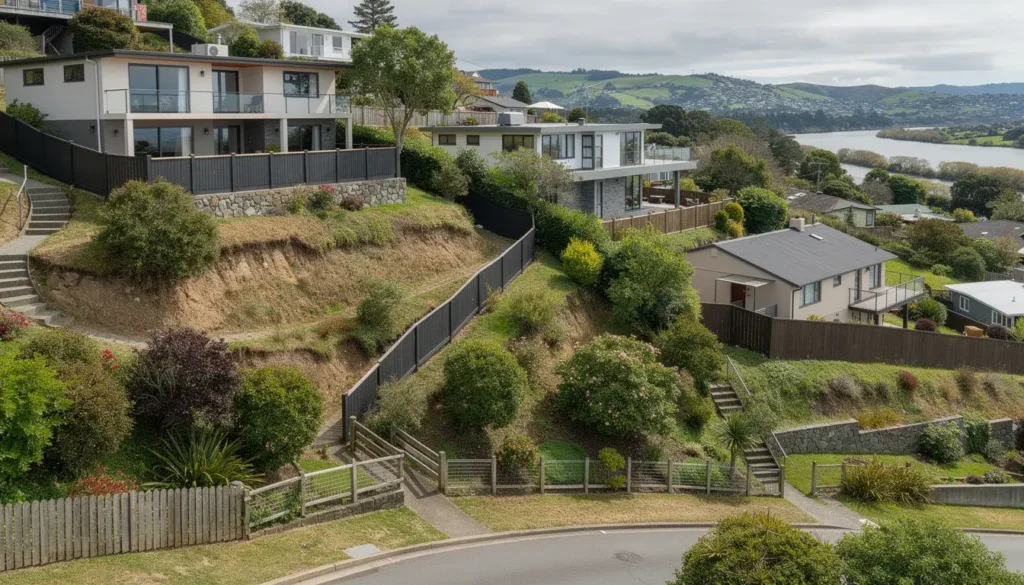
Many Lower Hutt properties sit on steep terrain. Suburbs like Maungaraki, Harbour View, and the Taita hillsides present fencing challenges that flat sections simply don’t have. If you’ve looked at your boundary and wondered how on earth you’ll get a straight, secure fence line across that gradient, you’re not alone.
This guide outlines practical fencing layouts, materials, and fencing cost considerations specific to sloping sites across the Hutt Valley. Whether you’re replacing an existing fence that’s seen better days or planning new fencing installation on a freshly purchased section, understanding your options upfront saves time, money, and headaches.
Slope affects everything:
- Stability – Posts work harder against gravity and wind on gradients
- Privacy – Gaps appear where flat panels meet uneven ground
- Cost per metre – Extra labour and materials add up quickly
- Compliance – Combined heights with retaining walls can trigger council requirements
This article focuses on residential fencing, pool fencing, and privacy screens on gradients rather than rural farm fencing. By the end, you’ll know which approach suits your section and what to ask when you book a site visit with local fencing contractors.
Main Fence Layout Options On Slopes
There are three main ways to build fences on a slope: stepped, raked (also called raked-to-grade), and terraced with retaining wall support.
The right fence layout depends on your specific situation. A side boundary running uphill from the street in Wainuiomata calls for different treatment than a rear boundary sitting above a steep bank in Normandale. Factors include:
- Steepness of the gradient
- Soil type and stability
- Your privacy requirements
- Whether retaining walls already exist
Each method has trade-offs. Below, we’ll break down when each approach works best for Lower Hutt properties.
Stepped Fencing
Stepped fencing uses a series of level fence panels that “step” up or down with the slope, creating a staircase-like profile along the top line. Each panel sits horizontally, with posts plumbed vertically and adjusted in height to follow the terrain.
This approach suits moderate slopes common in areas like Boulcott and Naenae, where a tidy appearance matters and privacy is the goal.
Benefits of stepped fencing:
- Straightforward construction and post layout
- Strong performance against Wellington’s notorious wind
- Works well with standard timber or coloursteel fencing panels
- Clean, orderly appearance that suits most homes
- Fencing contractors can complete work efficiently
Drawbacks to consider:
- Small triangular gaps appear at ground level between steps
- Privacy reduces slightly on steeper grades unless gaps are filled
- May need infill boards, rocks, or planting to close ground gaps
Stepped fencing is particularly practical for side boundaries between neighbouring driveways that run uphill from the road. Local fence builders handle residential fencing projects like this regularly across the Hutt Valley.
Raked (Raked-To-Ground) Fencing
Raked fencing keeps the top of the fence parallel to the slope. Rails and panels follow the gradient continuously, minimising gaps at ground level. Think of it as the fence “leaning” with the land rather than stepping over it.
This method works well on long, even slopes—such as rear boundaries backing onto reserves or banks in suburbs like Kelson or Tirohanga.
Benefits of raked fencing:
- Better ground coverage with minimal gaps
- Cleaner look on long, consistent slopes
- Stronger privacy and pet containment
- Professional appearance that follows natural contours
Challenges to manage:
- Requires more precise carpentry skills
- Pre-made panels are trickier to adapt
- Can be slower and slightly more expensive per metre
- Custom work adds to fencing cost
Different fencing materials adapt differently to raked builds. Custom timber palings can be cut to angle, while modular coloursteel fencing harbour view installations typically require purpose-cut panels. Specialist fencing services with experience in sloped sections can advise on the best approach for your specific gradient.
Terraced Fencing With Retaining Walls
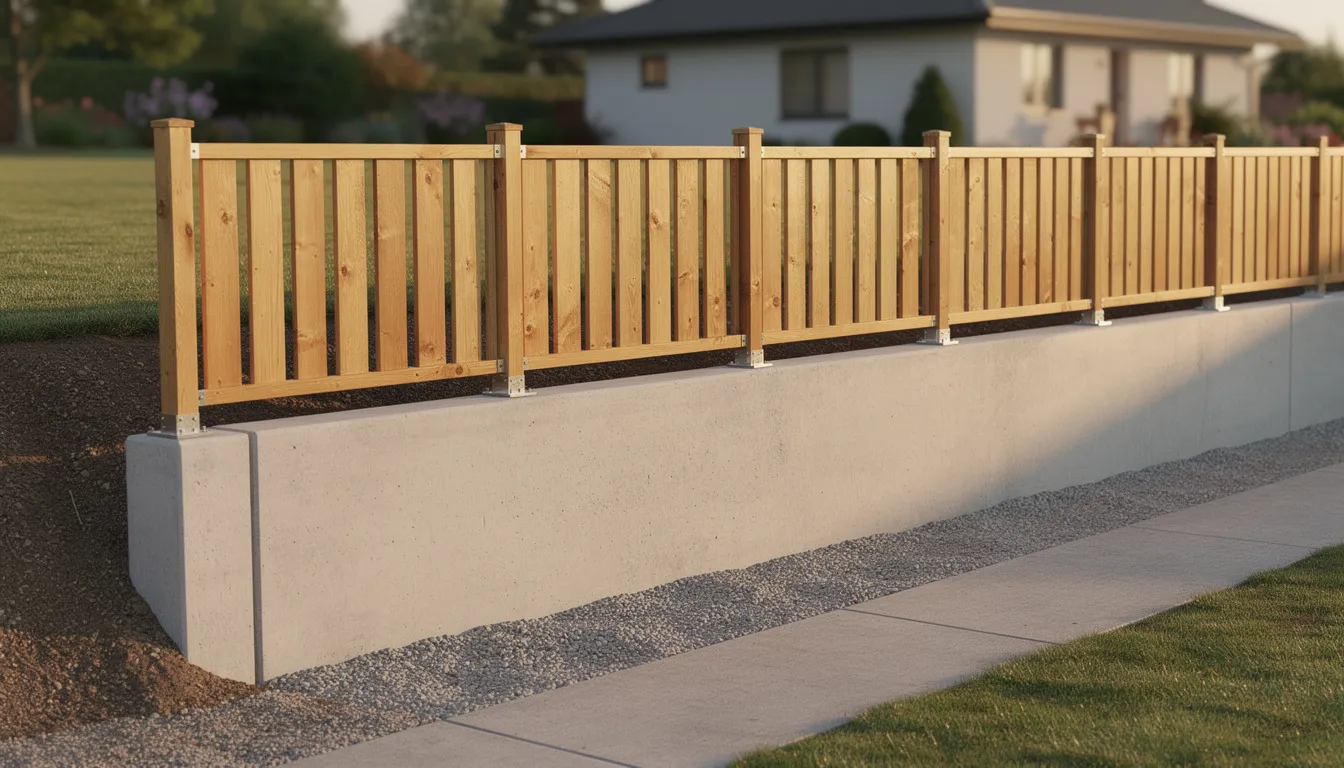
Terraced fencing uses one or more retaining walls to create flat “steps” on the slope. Standard fences are then built on top of or behind these walls, sitting on level ground.
This approach is common on steep Lower Hutt sections, particularly in Maungaraki and Korokoro, where homeowners want level lawn areas and usable outdoor space alongside their boundary fences.
Benefits of terraced systems:
- Maximum usable flat area on steep sections
- Very tidy fence lines with no gaps
- Strongest solution for sharp drops and unstable banks
- Manages water and erosion when drainage is included
- Creates functional space from previously unusable slopes
Downsides to weigh:
- Higher upfront cost ($150-$600 per linear metre for walls alone)
- May require engineering input for walls over certain heights
- Council consent more likely when combined heights are significant
- Longer project timelines—walls under 1 metre take 3-5 days; those over 2 metres can extend to 10-14 days including curing
Local example: Imagine a back yard in Maungaraki that drops 1.5-2 metres over 15 metres of boundary. A retaining wall halfway down creates a level upper terrace for lawn, with a classic paling fence along the top edge. The lower section gets its own fence line, neatly contained and private.
Local fence builders maungaraki regularly handle projects combining retaining walls with fencing—it’s a practical reality of building on Wellington Region hillsides.
Best Fencing Materials For Sloped Lower Hutt Sites
Wind exposure, salt-laden coastal air, and wet clay soils in parts of Lower Hutt all influence which fencing materials hold up best on slopes. Getting this choice wrong means faster deterioration, more fence repairs, and regret.
For residential fencing on gradients, the main options are:
| Material | Best For | Slope Adaptability | Maintenance |
|---|---|---|---|
| Timber | All slope types | Excellent (custom-cuts easily) | Moderate |
| Coloursteel | Moderate stepped slopes | Good (stepped) / Limited (raked) | Low |
| Hybrid (timber frame + metal panels) | Variable gradients | Very good | Low-moderate |
Timber Fencing On Slopes
Treated pine paling fence construction remains the most common choice for sloped residential sites across Lower Hutt. The flexibility of timber fencing allows builders to adapt to almost any gradient.
For damp slopes and cut banks, material grade matters:
- H4-treated posts – Essential for ground contact in wet soils
- H3-treated rails and palings – Protects against rot above ground level
- Pressure treated timber throughout ensures longevity
Typical uses for timber fencing lower hutt:
- 1.5-1.8 metre boundary fences on stepped or raked layouts
- Privacy screens between tiered decks
- Fencing above low retaining walls
- Paling fence harbour view installations where wind resistance matters
Approximate cost range: Standard 1.8m timber fencing on a sloped section typically runs higher than flat yards—expect premiums of 15-30% for stepping or raking labour. Timber fencing maungaraki projects on steep gradients may sit at the higher end.
The key advantage of timber is adaptability. It’s easiest to custom-fit around changes in grade, established trees, and existing retaining structures—situations where rigid panels struggle.
Coloursteel And Metal Panel Fencing On Slopes
Coloursteel and other metal panel systems have become popular in newer Lower Hutt subdivisions and for homeowners wanting low-maintenance boundaries. The clean lines and modern aesthetic suit renovated homes and new builds alike.
On slopes, these materials work best in stepped configurations. Because panels are pre-made and rectangular, continuous raked runs require significant custom work or purpose-designed rackable systems.
Benefits of metal panel fencing:
- Low maintenance in coastal conditions
- Excellent privacy (no gaps between boards)
- Modern appearance
- Durable against rot and pests
Limitations on slopes:
- Less flexible for sharp slope changes
- Visible steps between panels on gradients
- Careful detailing needed to close ground gaps
- Coloursteel fencing harbour view installations need windproof fixing
Some suppliers offer adjustable racking panels specifically designed for slopes. Products like sloping steel fence systems adjust from 0-45 degrees, constructed from galvanised steel with powder coating for corrosion resistance—a robust option for both residential and commercial fencing on difficult gradients.
Mixed builds combining timber framing with metal infill panels offer a balance of flexibility and durability. The timber posts adapt to the slope while the metal panels provide modern aesthetics and low maintenance.
Hybrid Solutions: Fences, Screens, And Planting
On challenging slopes, combining shorter fences with hedges, shrubs, or screens can solve awkward gaps and soften level changes without towering fence lines.
Examples of hybrid approaches:
- Timber fencing to 1.5m with taller planting behind for upper neighbours’ privacy
- Lower paling fence with climbing plants on trellis extensions
- Stepped fence with decorative grasses filling triangular ground gaps
Hybrid solutions are particularly useful where strict height rules limit how tall a boundary fence can be on top of a retaining wall. Rather than fighting regulations, smart design works with them.
These approaches are common along shared boundaries that climb steeply between houses in older Lower Hutt suburbs, where neighbours can create custom fencing designs that work for both properties.
Structural And Drainage Considerations On Slopes
On sloped Lower Hutt sites, structure and drainage are more critical than on flat sections. Get these wrong, and you’ll be dealing with leaning posts rotten rails and fence repairs lower hutt contractors see all too often after wet winters and storms.
Post Depth, Footings, And Bracing
Steeper slopes and strong Wellington winds mean posts often need deeper settings than on calm, flat sites. Standard 450mm post holes that work fine on level ground may need to extend to 600mm or more on gradients.
Key structural requirements:
- Solid concrete footings, not just dry-bag cement or shallow holes
- Extra depth in fill or loose topsoil areas
- Staggered post heights following the terrain
- Angle braces on key corners and end posts
- Adjusted post spacing on steep, soft ground
Many Lower Hutt hillside properties—particularly those built in the 1960s-1980s—sit on clay banks and excavated cut slopes. These conditions demand proper footing work to prevent movement over time.
Experienced fencing contractors harbour view and maungaraki suburbs will factor these requirements into their quotes automatically. New fencing installation maungaraki projects on steep sites should always include detailed footing specifications.
Drainage, Retaining Walls, And Ground Stability
Poor drainage above or below a fence on a slope causes posts to move, retaining walls to fail, and soil to slump. Wellington’s heavy rain events make this a real concern, not a theoretical one.
Standard drainage solutions:
- Drainage metal behind retaining walls
- Perforated pipes directing water away
- Weep holes allowing moisture to escape
- Surface water channelled away from fence lines
When a fence sits on or near a retaining wall, extra care is needed with engineering and council rules—especially if combined height is significant.
Important warning: Don’t backfill right up to timber fence rails on a bank without proper retaining behind. Soil pressure will push against the fence, causing failure. If your fencing project involves any height difference, discuss drainage with your builder upfront.
Lower Hutt Rules, Heights, And Neighbour Boundaries
Even on tricky slopes, Lower Hutt homeowners must comply with fence height limits, neighbour obligations, and pool rules. These requirements don’t disappear just because your section is challenging.
Details change over time, so always check current Hutt City Council guidance before building. What follows is practical overview information, not legal advice.
Fence Heights On Sloping Ground
Fence height is usually measured from natural ground level—but measuring gets confusing where land steps up or down sharply.
General guidance:
- Fences under certain heights (typically 2 metres) often don’t need consent
- Combined height with retaining walls may trigger extra requirements
- Get professional advice when building 1.8-2.0m fences along boundaries with existing high retaining structures
Example scenario: Two neighbours sit at different levels. From the lower property, a 1.8m fence on top of a 1.2m retaining wall appears as a 3-metre barrier. From the upper property, only the fence is visible. Both perspectives matter for consent and neighbourly relations.
Fencing cost upper hutt and lower hutt projects involving height complexities should include allowance for council liaison if needed.
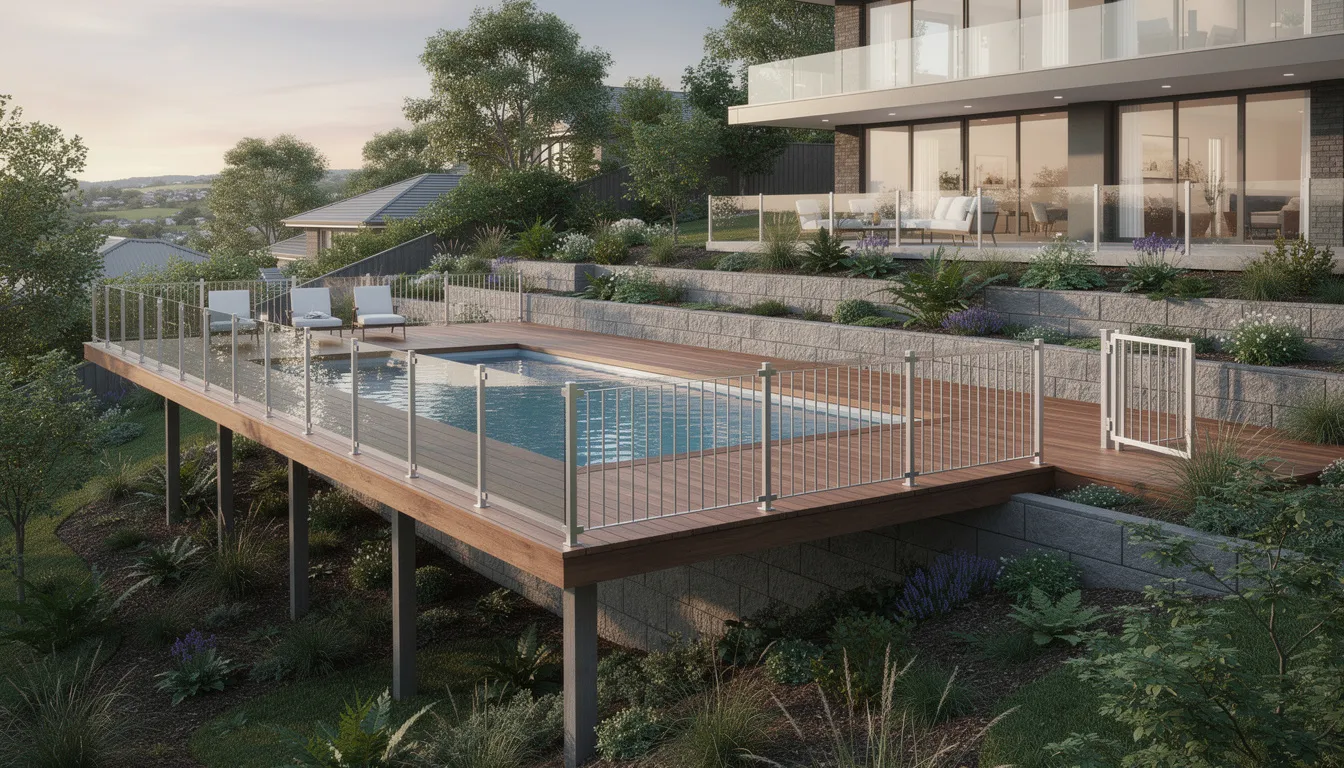
Pool Fencing On Slopes
Pool fencing lower hutt installations on sloped sections require extra attention. Gradients, steps, and retaining walls can create climbable gaps that violate pool safety requirements.
Common Lower Hutt situations:
- Pools on raised decks cut into hillsides
- Pool areas with multiple terrace levels
- Boundaries where ground drops away below the pool barrier
Compliant pool fencing must maintain consistent barrier height regardless of ground level changes. This means:
- No climbable gaps created by slope
- Pool-compliant gates with proper self-closing mechanisms
- Non-climbable surfaces adjacent to barriers
- No objects or steps reducing effective fence height on the low side
Pool fencing harbour view and pool fencing maungaraki installations on hillside properties regularly deal with these challenges. Pool fencing upper hutt sections face similar terrain issues.
For any sloping site around water, involve experienced pool-fence installers familiar with New Zealand pool safety standards. Pool inspection requirements mean getting this right matters for both safety and legal compliance.
Boundary Sharing, Neighbours, And Costs
Boundary fences on slopes are often shared between neighbours. Design choices—stepped versus raked—affect both properties differently.
Before work starts, discuss:
- Design approach (stepped, raked, or terraced)
- Material choice and colour
- Cost split arrangements
- Who owns or maintains which structure (wall versus fence)
On sloping sites with retaining, agreeing who maintains what prevents future confusion. The wall might be one property’s responsibility while the fence belongs to both.
Practical advice: Get written confirmation of key decisions. Even simple emails between neighbours documenting agreement on design, materials, and costs protect everyone. Old fences being replaced often reveal unclear historical arrangements—sorting this early saves disputes later.
Working With Local Lower Hutt Fence Builders
Sloped fencing projects in Lower Hutt benefit from builders who understand local ground conditions, wind exposure, and council expectations. Local fencing knowledge makes a real difference on challenging sections.
Fence builders harbour view, Maungaraki, and across the Hutt Valley handle residential fencing harbour view installations and commercial fencing regularly. The fencing service area for most Lower Hutt specialists covers the entire valley plus surrounding regions.
What To Expect At A Site Visit
When you’re ready to get fencing quotes, an on-site inspection beats phone estimates every time. Sloped sections have too many variables for accurate remote pricing.
Typical site visit steps:
- Walking the full boundary together
- Checking slope angles at multiple points
- Assessing soil consistency and any existing retaining
- Reviewing current drainage and water flow
- Discussing privacy needs from key viewpoints
- Identifying access challenges
A good builder will talk through options—stepped, raked, or terraced—with sketches or examples from previous Lower Hutt jobs. They’ll explain how different approaches affect your fencing cost lower hutt project.
Access factors like narrow paths, steep driveways, and tight side yards get factored into pricing and timeframes. Fewer fence repairs maungaraki result from builders who account for these challenges upfront.
Look for builders who offer clear, same-week site visits with written follow-up quotes. Handle residential fencing projects with the same professionalism expected for commercial fencing maungaraki installations.
Reading And Comparing Quotes
A proper quote for sloped fencing should include:
| Quote Element | What To Check |
|---|---|
| Measured metreage | Accurate boundary length |
| Material specification | Timber grade, steel thickness, coating |
| Post specification | Size, depth, treatment level |
| Footing details | Concrete mix, hole depth, bracing |
| Retaining/drainage work | Included or excluded? |
| Height measurement | From low side or high side? |
| Warranty | Duration and coverage |
| Timeline | Realistic for complexity |
Advice for comparing quotes:
- Get 2-3 quotes minimum for sloped sections
- Compare proposed designs, not just prices
- Ask how each builder plans to handle the slope
- Check whether fencing installation harbour view standards apply
- Confirm fast fence repairs are available if issues arise
The cheapest quote isn’t always best value. A builder proposing deeper posts and proper drainage on your fencing installation maungaraki project may cost more upfront but deliver fewer fence repairs maungaraki homeowners face down the track.
Before accepting a quote, confirm:
- Clear warranties on materials and workmanship
- Realistic timelines for your project complexity
- Site cleanup expectations
- No obligation estimate included site visit
For a no obligation estimate on your sloped section, contact lower hutt specialists who can handle everything from simple paling fence harbour view jobs to complex commercial fencing harbour view projects.
Frequently Asked Questions About Fencing Sloped Sections in Lower Hutt
Is it cheaper to fence a sloped section or a flat section in Lower Hutt?
Fencing sloped sections usually costs more per metre than equivalent flat sites. Extra labour, more complex set-out, and sometimes deeper posts or minor retaining work all add to the bill.
Gentle slopes may only add a small premium (10-15%), while steep or terraced sites in suburbs like Maungaraki or Korokoro can increase fencing cost harbour view projects by 25-40% or more.
The only reliable way to get accurate figures is an on-site visit. Generic calculators assume mostly flat ground—they won’t give you straight talk on fencing cost for your specific gradient.
Can I mix stepped and raked fencing on the same boundary?
Yes, mixing styles is common and often practical. Use raked sections on evenly sloping stretches and stepped panels where the gradient changes sharply or where gates and driveways intersect.
Transitions can be detailed neatly so they don’t look patchy. An experienced builder will mark out these transitions during the site inspection so neighbours understand the final look before work starts. Talk on fencing cost implications of mixed approaches during your quote discussion.
Do I always need a retaining wall for a steep boundary fence?
Not always. In some cases, deeper posts, strategic bracing, and careful benching of soil are enough for moderate drops.
However, once height differences or soil conditions exceed certain thresholds, engineered retaining becomes the safer and more durable option. Seeking professional advice makes sense where banks are high, soil is unstable, or water run-off is an issue—relying on a fence alone to hold soil rarely ends well.
Local fencing specialists serving the Hutt Valley can assess whether your situation needs full retaining or simpler solutions.
What is the best fence height for privacy on a sloping section?
1.8 metres is a common choice for privacy fencing, but on slopes, the effective height differs between high and low sides of the boundary.
In some cases, slightly lower or higher fences combined with planting achieve privacy without breaching height rules—particularly important above retaining walls where combined heights matter.
Check both street view and neighbour sightlines when choosing height. Confirm that combined wall and fence heights remain within council limits. Fencing cost maungaraki and other hillside suburb projects should factor in any consent costs if limits are pushed.
Can I DIY a fence on my sloped Lower Hutt property?
Experienced DIYers can tackle moderate slopes with care, especially for simple timber paling fence construction. The stepped approach is most achievable for confident handypeople with basic tools.
However, complex slopes, high wind zones, pool barriers, or fences built on retaining walls are usually better handled by professionals. Safety and compliance requirements make these projects risky for DIY.
Even if doing most work yourself, consider a professional consultation on layout, post sizing, and footing depth before starting. Residential fencing maungaraki and residential fencing upper hutt specialists often offer advisory services that improve DIY outcomes and prevent costly mistakes.
What fencing materials work best for sloped sections in Lower Hutt?
Popular materials include timber, aluminium, steel, and PVC. Timber offers excellent adaptability for slopes and can be customized easily. Aluminium fencing is lightweight, durable, rust-resistant (especially powder-coated types), and ideal for high-wind and coastal areas. Coloursteel or Colorbond fencing provides a sleek, low-maintenance finish, especially suited for stepped or moderate slopes.
How do vertical timber boards perform on sloped properties?
Vertical timber boards are favored for privacy and their ability to be customized to fit specific slope angles. They are particularly effective in high-wind zones common in Lower Hutt, providing both durability and aesthetic appeal.
What is the difference between stepped and raked fencing on slopes?
Stepped fencing uses horizontal panels arranged in a staircase pattern, suitable for moderate slopes. Raked fencing follows the slope angle continuously, minimizing gaps at the bottom and creating a smooth line, best for slopes under 30 degrees. Raked fencing requires more precise carpentry and may cost more.
Are retaining walls necessary for fencing on steep or unstable slopes?
For steep or unstable ground, combining retaining walls with fencing is a stable, long-term solution. Integrated retaining walls with boundary fencing help manage erosion and provide a solid foundation, especially on challenging terrains.
How important is drainage for fencing on sloped sections?
Drainage is critical to prevent water pooling that can cause fence post rot and structural issues. Solutions like French drains, perforated pipes, and weep holes help divert water away and maintain ground stability around fence posts.
Do I need council consent for fencing on sloped sections in Lower Hutt?
Yes, fences over 2.5 meters in height require consent from the Hutt City Council. Local regulations typically allow fences up to 2.0 meters high without consent, but combined heights with retaining walls may trigger additional requirements.
How does fencing cost differ between flat and sloped properties?
Fencing sloped sections usually costs more due to extra labor, materials, and complexity. Flat properties are generally easier and cheaper to fence. Costs in New Zealand range from $75 to $350+ per meter depending on material, terrain, and labor.
Can I estimate fencing costs for sloped sections online?
Yes, using a fence cost calculator can help estimate costs based on material type, fence length, height, and terrain complexity. It’s a practical first step to budget accurately before hiring a contractor.
Should I hire a professional or do it myself for fencing on slopes?
DIY fencing can reduce costs if you have the right tools and skills. However, hiring professional fencing contractors ensures compliance with local regulations, proper installation (including post depth and drainage), and fewer future repairs, especially important on challenging slopes.
What should I expect from local fencing contractors in Lower Hutt?
Reliable contractors set posts deep and straight with solid concrete footings, use treated timber (H4/H5) for durability, and incorporate proper drainage. They provide clear timelines, no hidden costs, check for underground services before digging, and back their work with warranties and clear communication throughout the fencing installation process.
Conclusion
Fencing options for sloped sections in Lower Hutt require careful consideration of terrain, materials, and local regulations. Whether you choose stepped, raked, or terraced fencing with retaining walls, selecting the right design and durable materials like treated timber or Coloursteel ensures a long-lasting and attractive boundary. Proper structural support, including deep concrete footings and effective drainage, is essential to withstand the region’s challenging weather and soil conditions. Working with experienced local fencing contractors in areas such as Maungaraki, Harbour View, and Upper Hutt provides expert guidance tailored to your sloped property, helping you avoid costly repairs and compliance issues. For the best results, book a site visit to get a clear, no-obligation estimate and professional advice that fits your needs and budget. With the right planning and professional support, you can enjoy a secure, stylish, and compliant fence that enhances your Lower Hutt home.